Friends Again â€å½ã¢â‚¬â€œ in the Beginning
T he climax of Dead Pixels, E4'southward recent sitcom from the creators of Peep Show and based on a grouping of friends obsessed with an online fantasy video game, was surprisingly affecting. After years of questing together, the friends, for whom the game had become the crucible in which their bonds had been made and reinforced, successfully establish the "Orb of Uncreation" into the slug queen'due south egg sac and thereby triumphantly conclude the game'due south story. The reward for the thousands of hours' effort? A treasure breast containing a pair of red gloves.
"No, this was totally, totally worth it," murmurs one of the players into the caput mic she uses to chat to her teammates (one of whom plays from the adjacent bedroom). "I'm and so happy with my life choices."
It's a joke about the fallacy of and so much homo effort, from postage collecting to Westminster jostling: the hollow realisation that the entreatment often lies in the striving, non the attaining. Information technology also strikes at the heart of a truth near a certain kind of online video game, played at a certain point of early adulthood. Presently enough yous discover that the game is merely the pretext to hang out with the people you met along the way. As the Dead Pixels characters mournfully say their goodbyes, i interjects, ecstatically, with the news that a story-elongating expansion has but been announced for the game. Blessed relief: the band can stay together.
Shadowbringers is the third and terminal expansion to Final Fantasy XIV, an online fantasy game much similar the fictional one of Dead Pixels. For the by six years information technology, too, has provided an excuse for tens of thousands of players around the globe to run into up. The MMO (massively multiplayer online game), every bit this genre is known, is no longer as pop as it once was (at ane point, Earth of Warcraft had twice equally many subscribers as Denmark had citizens) merely Terminal Fantasy XIV has provided a stronghold for players who would rather interact in loftier-fantasy-styled earth-saving endeavours than floss the nights away in Fortnite and its twitchily competitive ilk.
The story of Final Fantasy Fourteen'due south development has its own enthralling arc. Released in September 2010, just as the genre'due south popularity was peaking, the game was so poorly received it prompted a deep-bowing amends from its Japanese publisher'southward president and the sacrificial resignation of its producer, 1 of the visitor's longest-serving employees. The earth was closed for a multimillion-yen refurbishment and, when in 2013 the doors were opened, the response from players was rapturous, making a hero of Naoki Yoshida, the underdog designer who had so successfully masterminded the refit.
This, and so, is the tertiary expansive chapter in Yoshida's increasingly colossal story, which, for anyone looking to get-go from the kickoff, spans virtual continents and dimensions, and requires about as great an investment of fourth dimension as reading the complete works of Tolstoy. There are items that can be used to boot a new grapheme to the commencement of the latest chapter in the drama, only whichever route you accept, this is a joyously refined example of a mode of game that, in less sympathetic hands, can exist repellently arcane.
The dialogue is punchy, the characters well defined, and as you nuance about the lavish world you soon become defenseless upward in dramas both local and international. There are stirring set up-piece battles, for which you lot'll exist automatically paired with other players, too equally smaller-scale errands, such equally picking up items from local shops in exchange for information, and so on. You play as a hero, of class, but the world'south politics are fully formed, and yours is but i role in many required to win the state of war. You choose a class for your adventurer to fit your own temperament – knights, healers, samurai, gunslingers, dancers – and, abroad from the battlefield, yous may put hours into perfecting your graphic symbol'south outfit, choosing a pet or decorating your virtual homestead.
Unlike most games, Final Fantasy XIV requires a Netflix-way monthly subscription, coin used to continue the virtual world's servers humming. While the developer is therefore incentivised to waste players' time, those who stick to Shadowbringers' main storyline will achieve its heady climax within a few weeks. So once more, there'due south always a take chances you'll make some genuine friends along the way, and the game, similar the golf form, the bingo hall, the pub or the yacht club, will become a mere pretext for something more profound and lingering to flower.
Too recommended
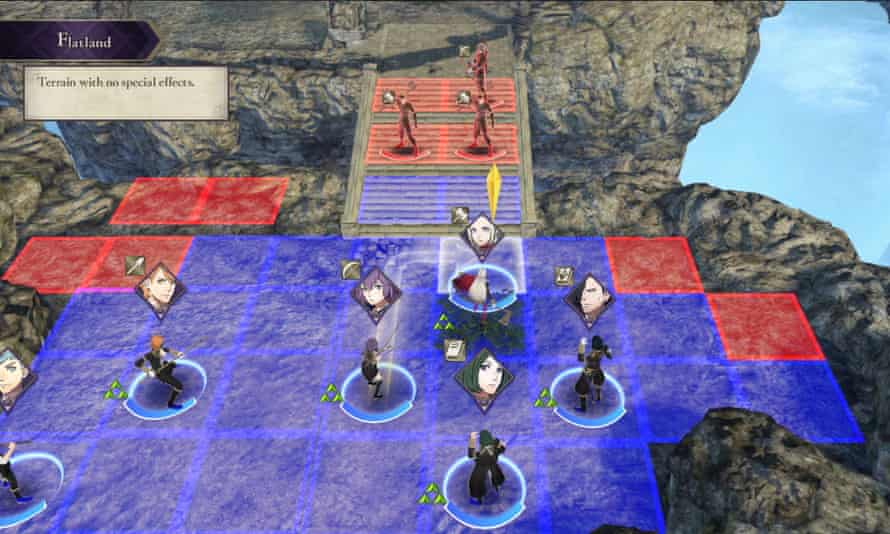
Burn down Emblem: 3 Houses
( Nintendo; Switch )
Since 1990, the Fire Emblem series has provided a kind of soap-opera rendering of chess, in which each piece has a proper name, backstory and romantic feelings. Emotional tension is ratcheted up by the fact that, if you allow a piece to fall during battle, he or she will be lost from the story for ever, a rule known in game blueprint as "permadeath". Fire Emblem: Three Houses has all of this and more, as you play equally a academy professor-cum-knight who takes accuse of one of 3 houses at an Officers Academy, responsible for both your students' survival on the battlefield, and their martial education in between skirmishes. A deep and securely rewarding game of strategy, wrapped in a high-school simulator.
This commodity was amended on five August. This isn't in fact the terminal "terminal" chapter of Terminal Fantasy Fourteen. This has at present been corrected.
Source: https://www.theguardian.com/games/2019/aug/04/final-fantasy-xiv-shadowbringers-review-square-enix
0 Response to "Friends Again â€å½ã¢â‚¬â€œ in the Beginning"
Post a Comment